The Synthetic Scholar: The Death of Intellectual Sovereignty
Daftar Isi
- The Mirage of the Efficient Scholar
- Cognitive Offloading and Mental Atrophy
- The Trap of Algorithmic Dependence
- Why Elite Institutions are Ground Zero
- The Erosion of Synthetic Scholarship
- Reclaiming Intellectual Sovereignty
We can all agree that the pursuit of knowledge has reached a frantic, hyper-accelerated pace. In the hallowed halls of our most prestigious universities, the pressure to produce, publish, and perform is relentless. If you are a student or a researcher today, you have likely felt the siren call of automation to keep your head above water. I promise that by the end of this exploration, you will understand why this convenience is actually a velvet-lined trap. We are going to preview the silent decay of the academic mind and how the over-reliance on generative intelligence is leading to the total collapse of intellectual sovereignty.
Think about it.
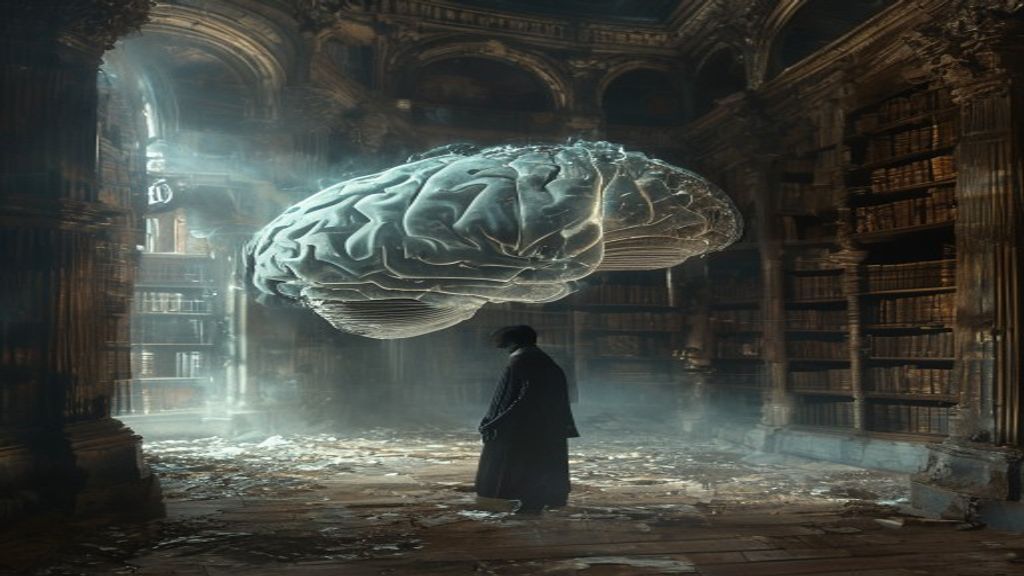
For centuries, the "Scholar" was defined by the struggle. The late nights spent in dust-filled archives, the agonizing process of synthesizing disparate ideas, and the slow, methodical construction of a unique thesis were the crucibles of brilliance. But today, a new figure has emerged on the campus: The Synthetic Scholar. This individual does not wrestle with ideas; they prompt them. They do not synthesize; they aggregate. While the output looks polished, the internal engine of original thought is beginning to rust from disuse.
The Mirage of the Efficient Scholar
Efficiency is the deity of the modern age. In elite institutions, where the "publish or perish" culture is most toxic, generative AI in academia is often rebranded as a mere productivity tool. It is marketed as a bicycle for the mind. However, there is a fundamental difference between a bicycle and a self-driving car. A bicycle still requires the rider to exert force, to balance, and to navigate. A self-driving car turns the driver into a passenger.
The Synthetic Scholar believes they are the driver.
But are they?
When you ask a large language model to outline your dissertation or summarize a complex philosophical text, you are not just saving time. You are delegating the most critical part of the intellectual process: the encounter with difficulty. Originality is born in the friction between a mind and a problem. When synthetic scholarship removes that friction, it creates a smooth, polished surface that lacks any depth. We see the result everywhere—papers that sound professional but say nothing new, and students who can pass an exam but cannot hold a nuanced debate without a digital crutch.
Cognitive Offloading and Mental Atrophy
Let us use an analogy. Imagine a world where everyone uses an exoskeleton to walk. At first, everyone is faster and stronger. But over time, the muscles in the legs begin to wither. Eventually, the person becomes entirely dependent on the machine. This is cognitive offloading in its most dangerous form.
The human brain is a plastic organ. It strengthens the pathways it uses and prunes the ones it neglects. When we outsource the labor of critical thinking, structural synthesis, and linguistic nuance to an algorithm, those "mental muscles" begin to atrophy. We are essentially lobotomizing our own creativity for the sake of a higher GPA or a faster publication cycle.
The danger is subtle.
You don't notice it happening. You start by using AI to "clean up" your grammar. Then you use it to "brainstorm" ideas. Soon, you are using it to "summarize" the research you were supposed to read. By the time you reach the end of your degree, you have become a high-level manager of a machine, but you have lost the ability to be a creator in your own right. This is the first stage of the collapse of intellectual sovereignty.
The Trap of Algorithmic Dependence
There is a darker side to this automation. Generative models are, by definition, backward-looking. They are trained on existing data to predict the next likely word or concept. This creates a feedback loop of mediocrity. When the ivory tower automation takes over, we stop pushing the boundaries of what is known and start recycling the average of what has already been said.
This is algorithmic dependence.
In elite institutions, where we expect the next generation of leaders and thinkers to emerge, this dependence is catastrophic. If our brightest minds are merely prompts for an average-producing engine, then we have reached a plateau of human progress. We are no longer climbing the mountain of knowledge; we are just rearranging the rocks at the base. The "Synthetic Scholar" is trapped in a mirror maze of their own previous prompts, unable to see a path toward truly revolutionary insight.
Why Elite Institutions are Ground Zero
One might think that "Elite" schools would be the most resistant to this decay. After all, they have the brightest students and the best resources. However, the opposite is true. The prestige economy of these institutions makes them the most vulnerable. In a world where a Harvard or Oxford degree is a high-stakes ticket to power, the incentive to "hack" the system is enormous.
When the grade becomes more important than the growth, the tool becomes the master.
We are seeing a shift where the "Elite" status is no longer a marker of intellectual rigor, but a marker of who can best leverage generative AI in academia to simulate rigor. This creates a hollowed-out aristocracy of the mind. They have the credentials, the jargon, and the polished presentations, but they lack the "Intellectual Grit" that comes from years of unassisted mental struggle. If the elite cannot think for themselves, who will lead?
The Erosion of Synthetic Scholarship
True scholarship is an act of synthesis. It is the ability to take two unrelated concepts and forge a new understanding. This is a deeply human, messy, and often illogical process. Generative AI cannot do this. It can only find statistical correlations. It can simulate synthesis, but it cannot experience the "Eureka!" moment of genuine discovery.
By relying on synthetic scholarship, we are losing the "Qualia" of learning. We are trading the rich, textured experience of deep understanding for the flat, two-dimensional convenience of information retrieval. It is the difference between eating a gourmet meal and swallowing a nutrient pill. One nourishes the soul and the senses; the other merely keeps the body functioning.
But wait, there is more.
The erosion of synthesis also means the erosion of ethics. When you don't own your thoughts, you don't feel responsible for them. We see an increase in "hallucinated" citations and academic fraud, not because students are inherently dishonest, but because they have distanced themselves so far from their own work that they no longer recognize the truth from the statistical probability of the truth.
Reclaiming Intellectual Sovereignty
So, how do we stop the bleeding? How do we prevent the total collapse of the independent mind? It requires a radical return to the "Manual Mode" of thinking. We must treat intellectual sovereignty as a precious resource that must be defended against the encroachment of easy automation.
- The Analog Buffer: We must insist on periods of research and writing that are entirely disconnected from the digital grid. No AI, no internet, just the mind and the page.
- Valuing the Process over the Product: Institutions must change how they evaluate brilliance. We should reward the "Failed Experiment" and the "Complex Struggle" more than the "Polished Output."
- Intellectual Resistance: We must foster a culture where using AI to think is seen as a form of intellectual surrender, not a sign of "tech-savviness."
The future of our civilization depends on the quality of our thinking. If we outsource our intellect to machines, we forfeit our right to lead our own destiny. The "Synthetic Scholar" may win the race for productivity, but they will lose the war for truth. We must choose to be the architects of our own thoughts, the weavers of our own logic, and the masters of our own minds. Only then can we reclaim our intellectual sovereignty and ensure that the Ivory Tower remains a beacon of light, rather than a factory for automated echoes.

Posting Komentar untuk "The Synthetic Scholar: The Death of Intellectual Sovereignty"
Kolom komentar adalah tempat kita berbagi inspirasi. Yuk, sampaikan pikiranmu dengan cara yang baik dan saling menghargai satu sama lain!